
Introduction
Ear infections are a common problem in children. Many parents wonder why children get frequent ear infections and how they can prevent them. An ear infection happens when germs cause swelling or fluid buildup in the ear. Because children’s ears are still growing, they are more likely to get these infections. Understanding the causes and prevention of childhood ear infections can help keep your child healthy.
What Are Ear Infections in Children?
Ear infections in children usually affect the middle ear, which is the space behind the eardrum. This area can fill with fluid and germs, leading to pain and sometimes fever. Most ear infections in kids are called “acute otitis media.” This means the infection starts suddenly and causes symptoms quickly. While some children may have only one ear infection, others may get them often. These are called recurrent ear infections in kids.
Why Are Children Prone to Frequent Ear Infections?
Children are more likely to get ear infections than adults for several reasons. First, their ear tubes, called Eustachian tubes, are shorter and more level. Because of this, germs can reach the middle ear more easily. Also, children’s immune systems are still developing. As a result, they may not fight off infections as well as adults. In addition, children are often exposed to more germs at daycare or school. This increases their risk of getting sick.
Common Causes of Ear Infections in Children
There are several causes of ear infections in children. Understanding these can help with childhood ear infection prevention. Common causes include:
Because these causes are common, it is important to know how to lower your child’s risk.
Recognizing Symptoms of Ear Infections
It is important to spot the signs of an ear infection early. While symptoms can vary, common signs include:
Sometimes, young children cannot say what hurts. Therefore, watch for these signs if your child seems unwell.
How Ear Infections Are Diagnosed
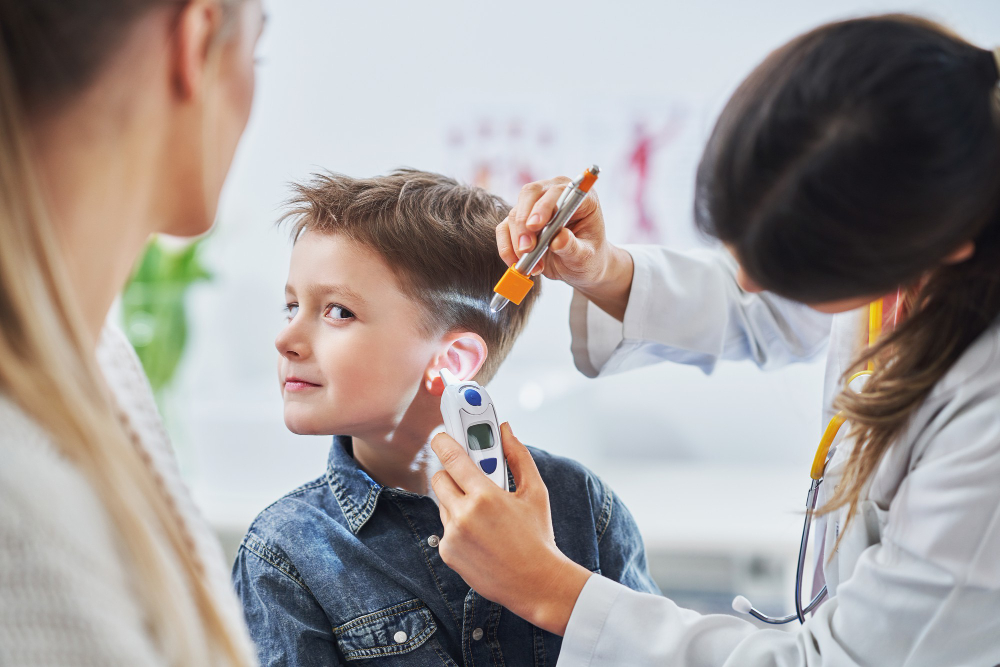
Doctors use a simple exam to check for ear infections. First, they look inside the ear with a special light called an otoscope. This helps them see if the eardrum is red, swollen, or has fluid behind it. Sometimes, doctors may use a small device to check if the eardrum moves normally. In rare cases, they may order hearing tests or other exams if infections keep coming back. Early diagnosis helps prevent problems with hearing or speech.
Effective Prevention Strategies
There are several ways to help prevent ear infections in children. Try these tips for childhood ear infection prevention:
Because prevention is key, these steps can lower your child’s risk of recurrent ear infections.
When to See a Doctor
Sometimes, ear infections need medical care. See a doctor if your child:
Early treatment can help prevent hearing loss or other problems. If your child gets frequent ear infections, ask your doctor about seeing a pediatric ENT specialist.
Conclusion
Ear infections are common in children, but you can take steps to prevent them. Because early care is important, watch for symptoms and follow prevention tips. Consult a pediatric ENT specialist for personalized advice on preventing ear infections in children.